
مرحباً بكم في جي إم تك
مرحباً بكم في جي إم تك
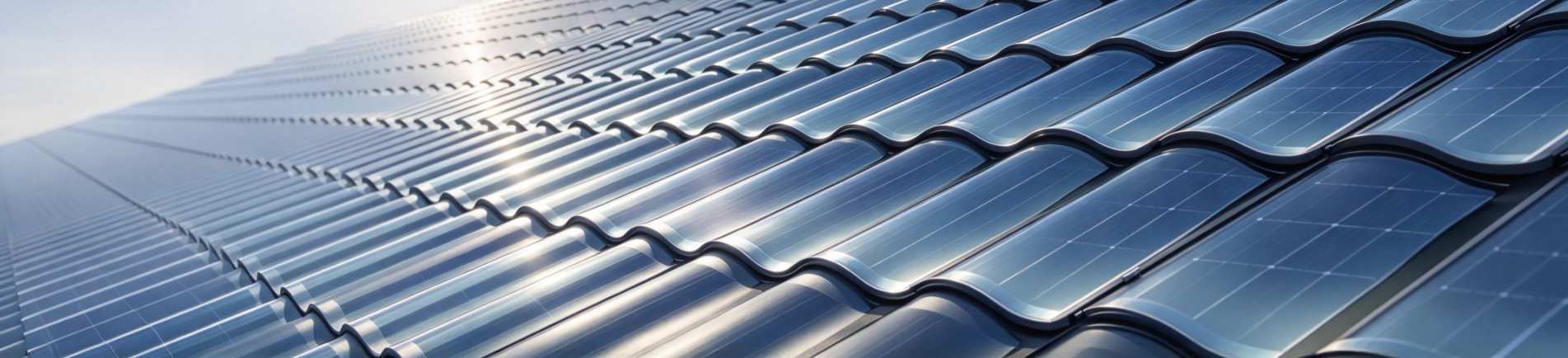
Customizable Curved Solar Roof Tile with BC Cells for OEM Partners
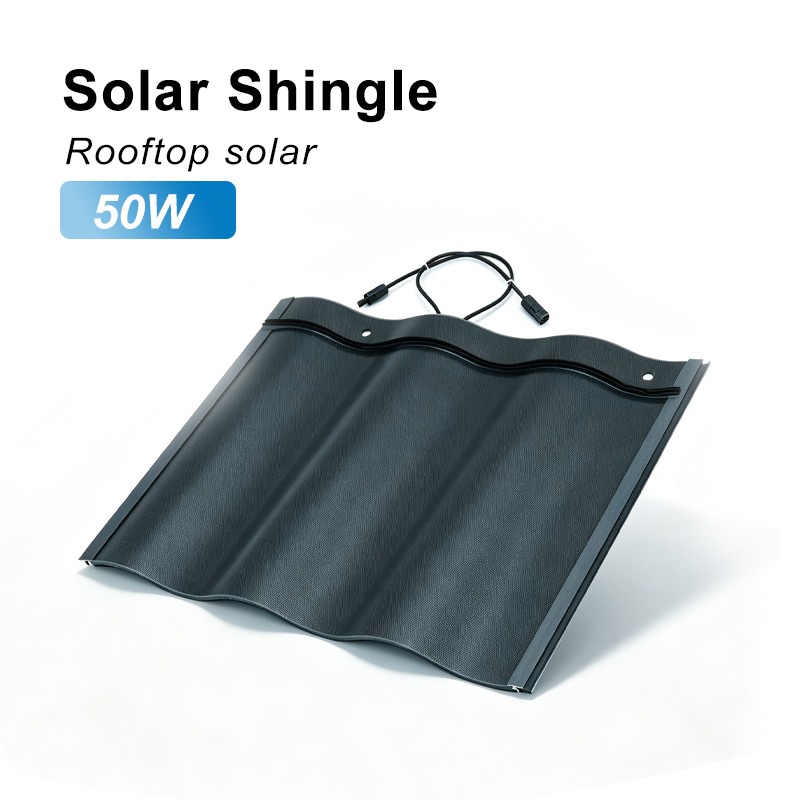
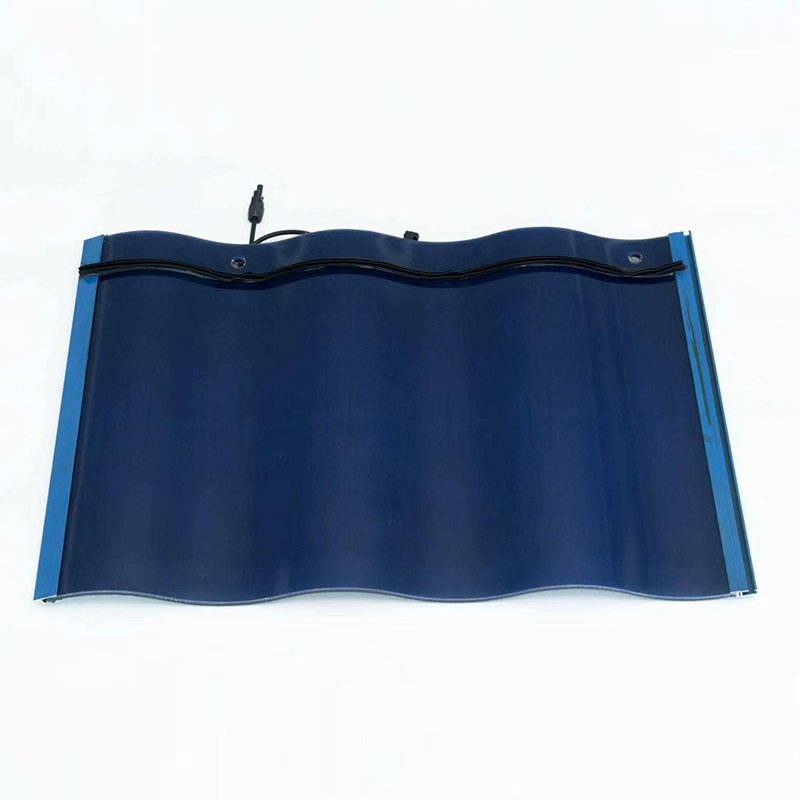
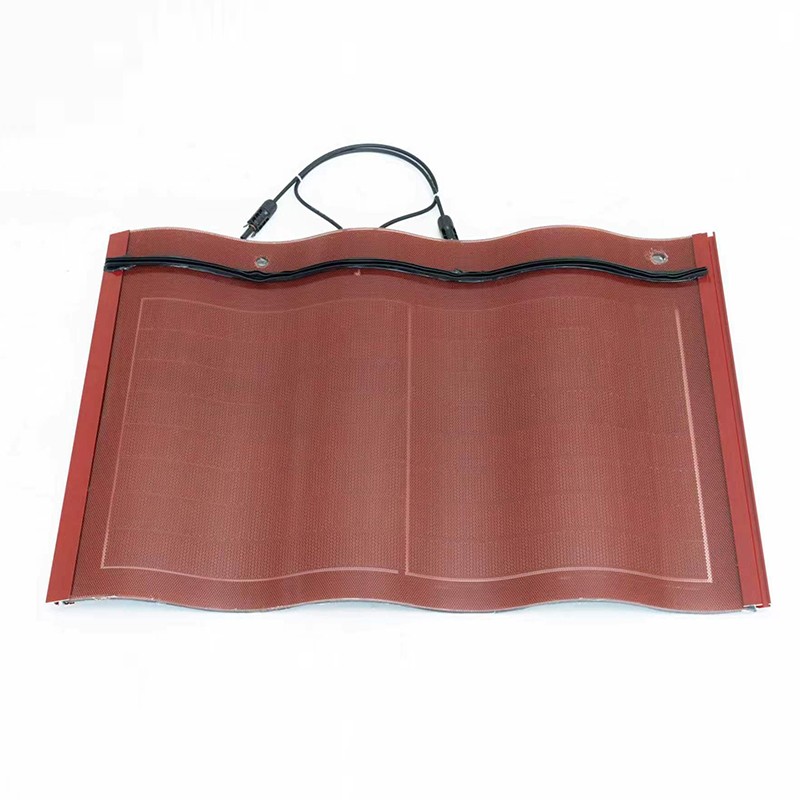
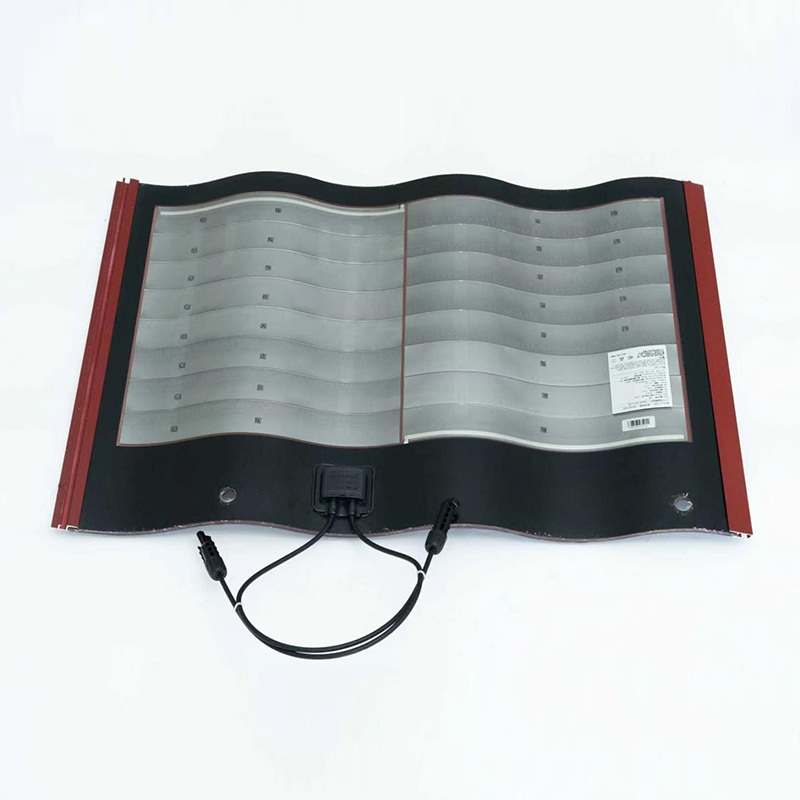
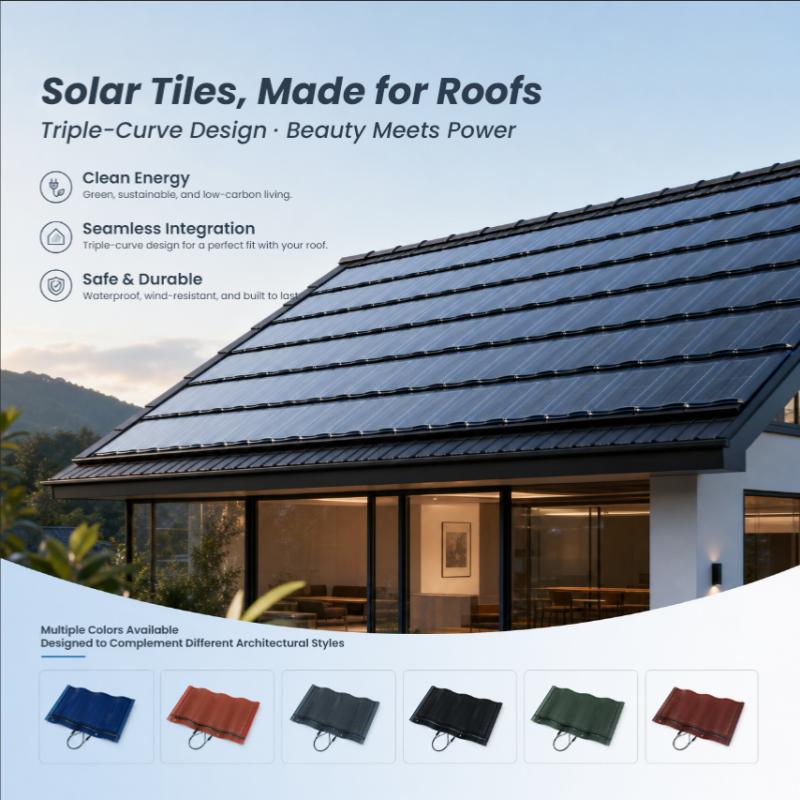
The GreenMore Curved BC Solar Roof Tile integrates high‑efficiency Back‑Contact (BC) photovoltaic cells into a classic triple‑wave (S‑shaped) architectural tile form factor. Designed for residential roof replacements, historic heritage renovations, and high‑end commercial BIPV (Building‑Integrated Photovoltaics) projects, this curved solar tile replaces traditional clay or concrete roofing tiles with a self‑generating, weather‑resistant energy system.
Featuring up to 24.1% module efficiency, 5,400 Pa mechanical load resistance, IP68 waterproof junction box, and 25‑year linear power warranty, the curved BC solar tile delivers superior low‑light performance and architectural aesthetics for OEM partners, distributors, and EPC contractors. Certified EN 14782, EN 1090‑1, ISO 9001, ISO 14001, CE, IEC 61215 and IEC 61730.
رقم الصنف :
GM-HW50BCقسط :
TT/LCأصل المنتج :
Jiangsu, Chinaمصنوع بطريقة مخصصة :
Yesميناء الشحن :
Shanghai, Nanjing, Ningbo, Guangzhou, Shenzhen, etc.مهلة :
15 daysضمان :
25 years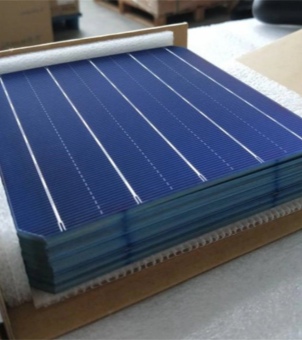
Back‑contact architecture eliminates front busbars, delivering stronger low‑light performance and higher conversion efficiency.
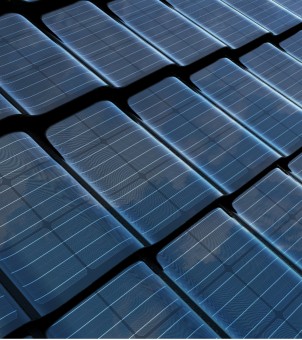
Architectural curved profile replaces traditional roofing materials, achieving seamless building integration.
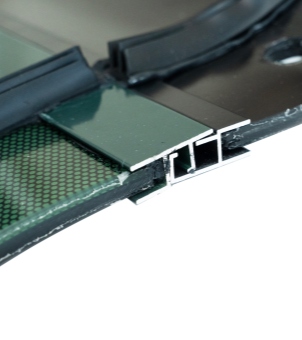
Composite materials provide enhanced resistance to UV, heat, salt mist, wind load, and hail for long‑term reliability.
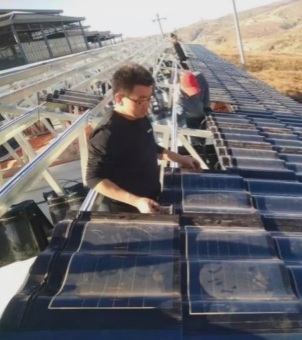
Modular tile system reduces roof load and shortens EPC project timelines for both new roofs and retrofit applications.
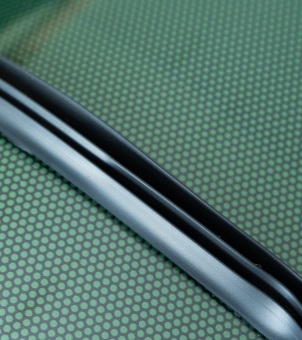
Sealed interlocking channels, IP68‑rated junction boxes, and MC4 connectors ensure waterproofing and protection against strong winds.
By moving all electrical grid lines and busbars to the rear side of the cell, BC technology creates a uniform, deep‑black appearance across the entire curved surface. No exposed silver lines—allowing the tile to blend naturally with conventional roofing materials.
BC cells feature lower power temperature coefficients and reduced recombination losses. This results in higher energy generation during off‑angle sunlight hours, morning/evening light, and high ambient thermal conditions.
Engineered with dual factory‑installed MC4 lead wires and pre‑drilled mechanical mounting points along the upper ridge, each tile's interlocking system creates a continuous rain seal that resists wind‑driven rain, hail, and high mechanical loads.
| Category | GreenMore Curved Solar Roof Tiles | Traditional Solar Panels |
| Building Integration (BIPV) | Fully replaces roofing materials; curved profile blends seamlessly with architecture | Requires mounting racks; visually prominent and less integrated |
| Cell Technology | BC back‑contact cells with no front busbars; superior low‑light performance | PERC / TOPCon / HJT with visible busbars; standard performance |
| Installation Method | Modular tile system; ideal for new roofs and retrofit projects | Requires racking, roof penetration, and additional structural work |
| Roof Load | Lightweight composite structure; reduces load on roof | Heavier modules; requires stronger support structures |
| Maintenance | Natural water runoff due to curved shape; lower cleaning frequency | Flat surface collects dust; requires regular cleaning |
| Wind & Weather Resistance | Curved profile improves wind resistance; ideal for coastal/high‑wind regions | Depends on racking system; higher risk under extreme wind loads |
| Application Scenarios | Residential roofs, commercial buildings, cultural architecture, hotels, renovation projects | Industrial rooftops, commercial flat roofs, ground‑mount systems |
| Lifecycle Cost (LCOE) | Combines roofing + solar generation; lower long‑term cost | Requires separate roofing + solar system; higher combined cost |
| Parameter | GM‑HW50BC | GM‑HW42BC | GM‑HW37BC |
| Max. Power (Pmax) | 50W | 42W | 37W |
| Open Circuit Voltage (Voc) | 4.85V | 4.65V | 4.65V |
| Short Circuit Current (Isc) | 13.15A | 12.95A | 12.95A |
| Voltage at Pmax (Vmp) | 4.45V | 3.95V | 3.85V |
| Current at Pmax (Imp) | 11.75A | 10.63A | 10.15A |
| Module Dimensions (L*W*H) | 720*500*32mm | 720*500*32mm | 720*500*32mm |
| Module Weight | 6.5kg | 6.5kg | 6.5kg |
| Front Cover | PV Tempered Glass | PV Tempered Glass | PV Tempered Glass |
| Backsheet | PV Tempered Glass | PV Tempered Glass | PV Tempered Glass |
| Frame | Aluminum Alloy | Aluminum Alloy | Aluminum Alloy |
| Junction Box | IP68 / MC4 | IP68 / MC4 | IP68 / MC4 |
| Color | Gray, Green, Red, Black | Gray, Green, Red, Black | Gray, Green, Red, Black |
| Max. System Voltage | 1000V DC | 1000V DC | 1000V DC |
| Max. Series Fuse Rating | 30A | 30A | 30A |
| Max. Static Load | 5400Pa | 5400Pa | 5400Pa |
| NOCT | 45±2℃ | 45±2℃ | 45±2℃ |
| Fire Resistance | Class C | Class C | Class C |
| Power Tolerance | 0~+3% | 0~+3% | 0~+3% |
| Module Efficiency (%) | 24.1 | 23.9 | 23.9 |
| Temperature Coefficient of Isc | +0.041%/℃ | +0.041%/℃ | +0.041%/℃ |
| Temperature Coefficient of Voc | -0.220%/℃ | -0.220%/℃ | -0.220%/℃ |
| Temperature Coefficient of Pmax | -0.260%/℃ | -0.260%/℃ | -0.260%/℃ |
Note: Product dimensions and parameters are subject to the actual delivered product. Updated on October 1, 2026.
Suitable for new roofs and retrofit projects, the modular tile system integrates into standard roofing battens with integrated fixing points and pre‑wired MC4 connectors.
Compatible with GreenMore BIPV systems, hybrid inverters, and energy storage solutions—supporting regional installation standards across North America, Europe, Middle East, and Southeast Asia.
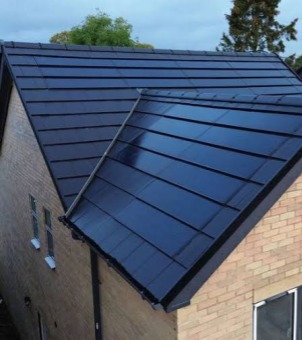
Replaces traditional clay or concrete tiles on villas and residential homes, delivering both weather‑resistant roofing and clean solar generation.
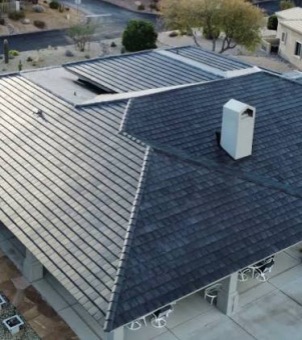
High‑end commercial properties seeking BIPV integration and premium architectural aesthetics with self‑generated solar power.
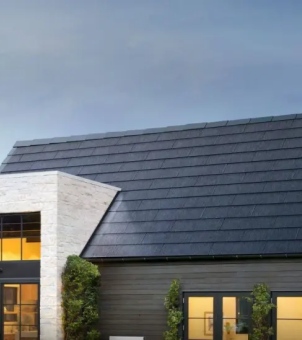
Historic heritage renovations and traditional‑style buildings require curved tile profiles that preserve architectural character while generating solar power.
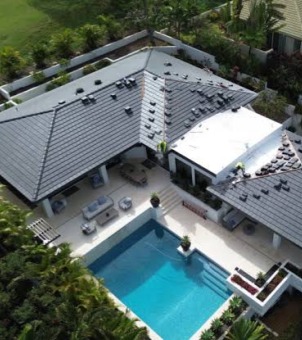
Luxury hospitality properties demand uniform, high‑end aesthetics—curved BC tiles blend seamlessly while supporting ESG and energy‑saving goals.
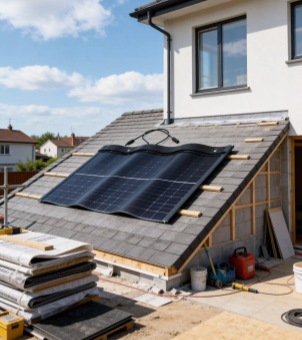
Replaces aging roof tiles while upgrading the building to solar generation—combining roofing and solar in a single installation pass.
EN 14782, EN 1090‑1, ISO 9001, ISO 14001, and CE certified—meeting international standards for roofing materials, structural performance, and environmental management.
IEC 61215 and IEC 61730 certified—ensuring module performance, safety, and long‑term reliability under international PV testing protocols.
Since 2017 GreenMore has focused on reliable BIPV solutions; every solar tile carries a 25‑year linear power warranty backed by factory testing.
Trusted OEM Support
Custom system design, layout simulation, branding, and wholesale distribution support for multi-region B2B partners, project contractors, and regional distributors. Explore our full solar tile range.
Curved surfaces receive solar irradiance at varying angles. BC technology eliminates front metal grid shading, maximizing active light‑absorption area and maintaining higher conversion efficiency even under non‑perpendicular sunlight.
Yes. The tile mounts onto standard roofing battens using integrated fixing points. Pre‑wired MC4 connectors route underneath the overlapping edge, protecting wiring from UV exposure and weathering.
High‑strength tempered glass provides superior impact resistance (Class 4 hail rating) compared to brittle ceramic or clay tiles. Combined with an IP68 junction box, the system withstands extreme wind pressure, heavy snowfall, and prolonged environmental exposure.
Gray, Green, Red, and Black options are available to match different architectural styles. Custom colors can be discussed for OEM orders.
EN 14782, EN 1090‑1, ISO 9001, ISO 14001, CE, IEC 61215 and IEC 61730—covering roofing materials, structural performance, PV module performance and safety.
The curved solar tile carries a 25‑year linear power warranty, backed by factory testing and long‑term engineering support for OEM partners.
يرجى مواصلة القراءة، والبقاء على اطلاع، والاشتراك، ونحن نرحب بك لتخبرنا بما تفكر فيه.




حقوق الطبع والنشر
@ 2026 جي إم تك جميع الحقوق محفوظة
.  الشبكة المدعومة
خريطة الموقع / مدونة / Xml / سياسة الخصوصية


